


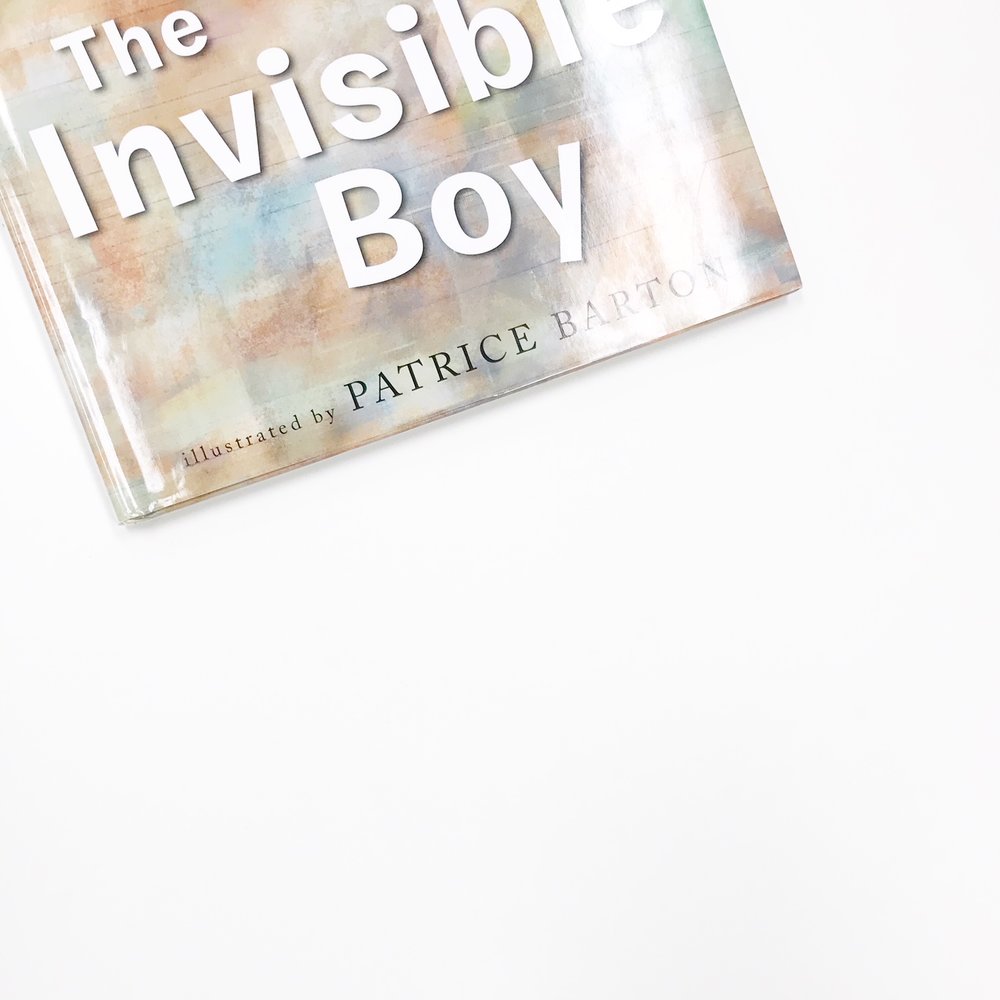
The Invisible Boy is a phenomenal kids books about inclusiveness, friendship, kindness, and the significance of making sure no child is ever made to feel invisible. Check it out!
The Beauty and Power of Trudy Ludwig’s The Invisible Boy
I frequently turn to books for answers and support when life throws tough challenges our way.
Books can’t solve all of our problems, that’s for sure. But you know what books CAN do,? You know what their very purpose is?
To serve as windows and mirrors for students and adults.
To foster empathy in our children and provide safe spaces for them to explore daunting emotions.
Great books can help us build a generation of globally aware and conscious kids, while simultaneously helping our young ones find themselves in stories so they don’t feel so alone.
In speaking to the beauty and power of great books, I want to highlight The Invisible Boy, a phenomenal story written by Trudy Ludwig and illustrated by Patrice Barton.
A Walk Through The Invisible Boy
In The Invisible Boy, a child named Brian never feels seen or noticed by his classmates. He has no friends, and he is invisible to his teacher.
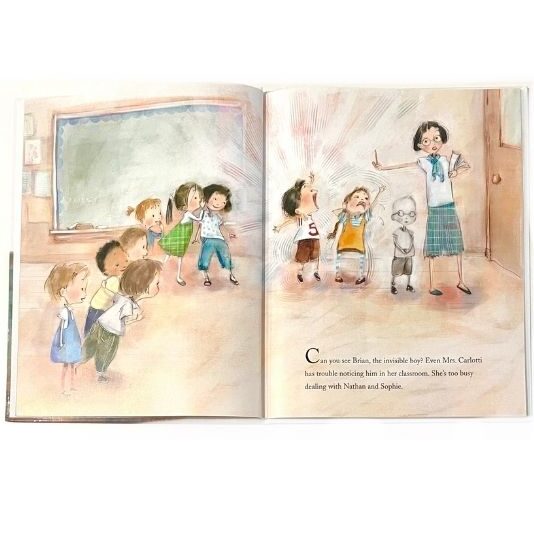
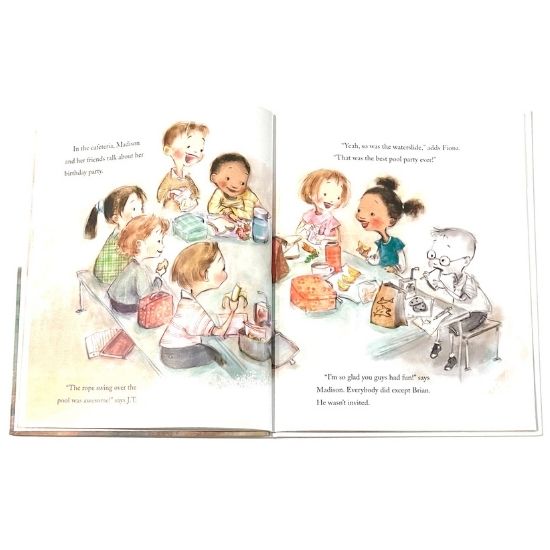
Brian’s classmates never pick him to be on their sports teams at recess. Brian’s teachers do not acknowledge him, and his classmates never invite him to birthday parties. Thus, Brian appears devoid of color in the story, making him invisible among his classmates.
Want to purchase The Invisible Boy? Click these links!


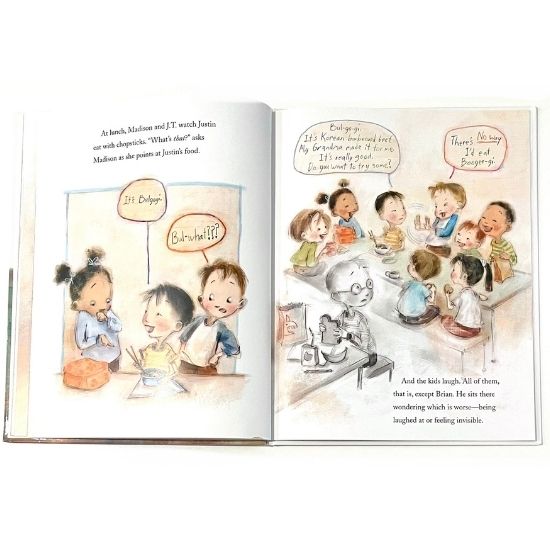
Eventually a new child named Justin comes to school and winds up in Brian’s class. Justin becomes a new target. Justin’s classmates make fun of him at the lunch table. They mock his unfamiliar food, and the students laugh at his “otherness.” All, that is, except for Brain.
To the contrary, Brian is the first to reach out to Justin. Doing what he does best, Brian sends Justin a note with a cool drawing. In the note, Brian says he thought Justin’s food, bulgogi (a Korean dish) looked good. The note goes off as hoped – it makes Justin smile.
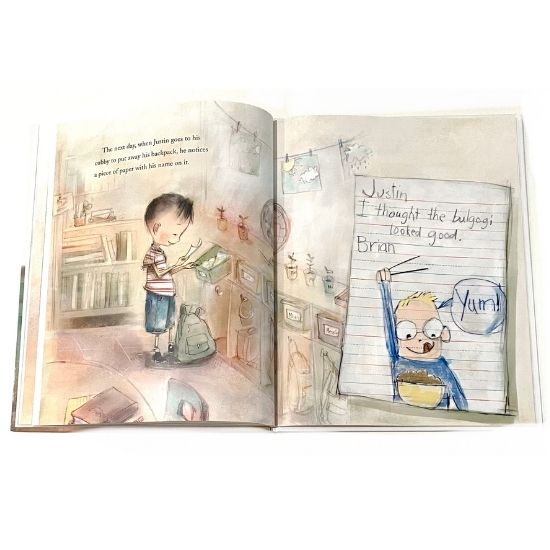
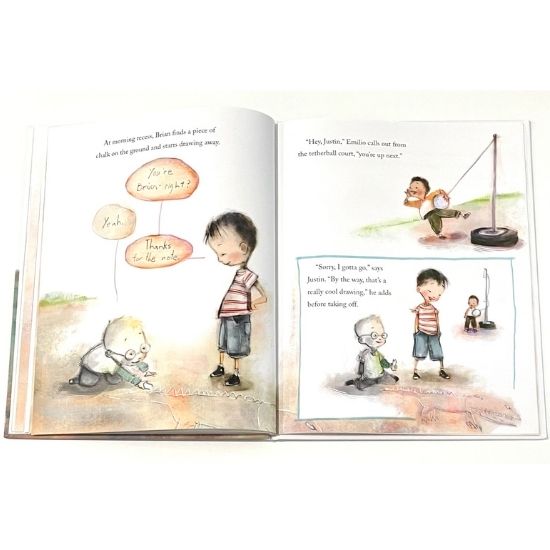
Soon enough, Brian and Justin form a special bond. The two boys team up for a class project, and Brian finds a way to step out of the shadows and flourish.
Not only does Brian make a new friend, but Barton’s illustrations show how small acts of kindness fill Brian up with color until he is, quite literally, a vibrant force in his classroom.
RELATED: We’ve got all the best children’s books for you on Happily Ever Elephants, so be sure to check them out!
The Invisible Boy Captivates Students
Without fail, I read The Invisible Boy to all of my elementary students each year. And each year, this powerful story captivates them.
Children are intrigued by the way Patrice Barton, The Invisible Boy’s illustrator, uses color to convey Brian’s confidence and innermost feelings. We discuss why the illustrator may have made this important choice – how loneliness feels dreary and bleak, but feeling seen and accepted makes life feel vibrant and joyful.
When we finish reading and discussing The Invisible Boy, I give students a challenge: make sure no student in your class feels invisible. I remind them to be mindful of their fellow classmates, to look around, be kind, be compassionate.
It takes work, and it is not always easy among students who can be — let’s face it — cliquey and catty. But it is important to give children constant reminders of how vitally Important it is to be inclusive, to have kind hands, kind words and kind hearts.
The Invisible Boy Conveys the Importance of Small Acts of Kindness
The Invisible Boy is a phenomenal story, perfectly illustrating how one tiny act of kindness – one small act of acknowledgement or appreciation – can infuse our lives with color and have a significant impact on our self esteem.
We need to be so darn certain that none of our children or students are EVER made to feel nonexistent.
Feeling invisible can be just as damaging to a child’s social and emotional well being as being teased and laughed at. It is up to us, the adults, to model the virtues we want the next generation to inherit.
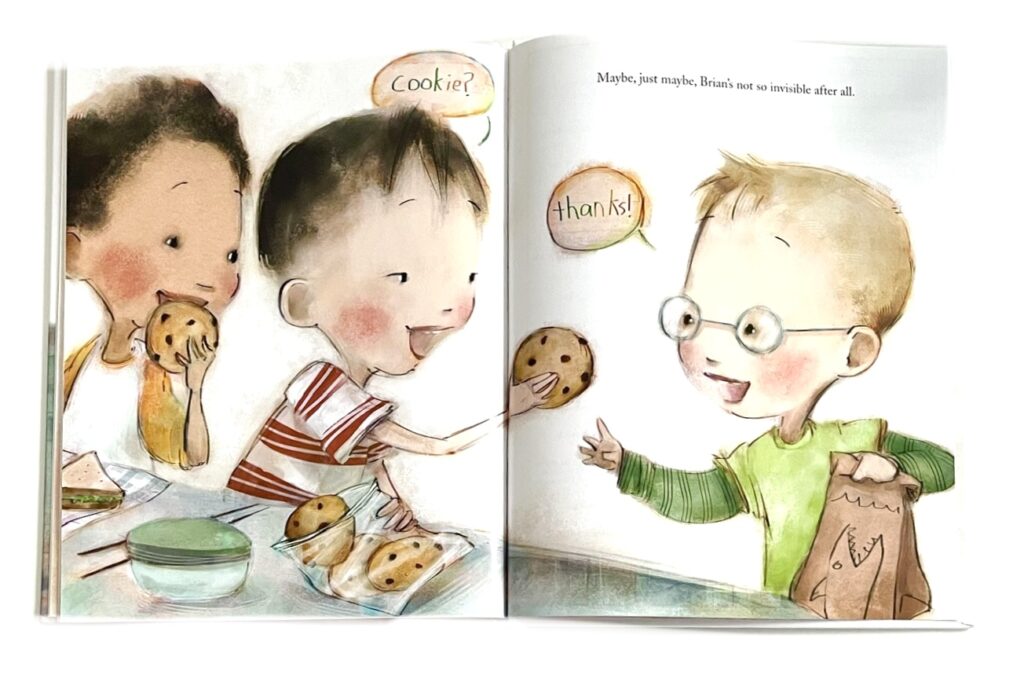
The Invisible Boy beautifully conveys the importance of being kind and compassionate. It encourages children to befriend those in their classrooms who are too often overlooked.
We are the adults. We need to do something for these invisible kids, and we need to start by making sure that every child in our homes and classrooms feels heard, supported, and – most importantly – loved. The Invisible Boy is a must for your collections, and I can’t rave about this book enough.
Want to purchase The Invisible Boy? Click these links!





Leave a Reply